

Your car insurance may cover storm damage to your vehicle if you have comprehensive coverage, subject to any conditions and exclusions stated in your policy. This is typically the only way to insure your vehicle for storm damage, since most homeowners and flood insurance policies do not include coverage for cars.
Comprehensive coverage is an optional insurance coverage that pays for damage to your car not related to a collision. This includes things like:
- Natural disasters and storms
- Fires
- Theft
- Vandalism
- Damage caused by animals
Comprehensive coverage is not typically required for car insurance policies. However, you may be required to carry comprehensive coverage if you have a loan or lease. Check with your insurance company to see if you have it.
What is considered storm damage?
Storm damage can be any damage that results from inclement weather including flooding, hail and wind.
Flooding
Heavy downpours can cause sudden floods that pose a serious risk to your car. Excessive water can cause mechanical, electrical and cosmetic damage, and a submerged car can experience irreparable damage.
Hail
Hail is a form of precipitation made of ice pellets. It can form during thunderstorms, where raindrops freeze into ice. Hail can range in size, but even small hailstones can cause significant damage to a car.
Wind
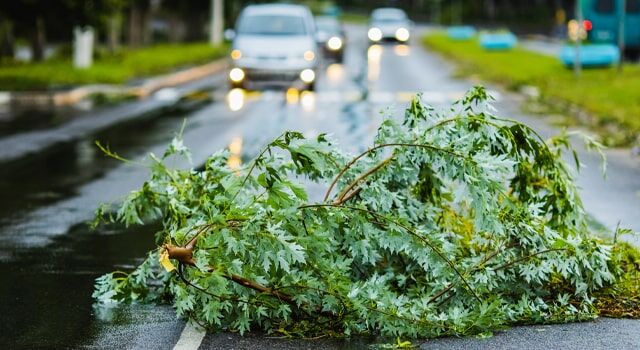
Strong winds can snap tree branches and sometimes can even bring down entire trees. If a tree or parts of a tree fall on your car, that can be considered damage from a storm. Debris can also be whipped around by fast winds and cause severe damage to your car.
How does car insurance cover storm damage?
If you carry comprehensive coverage, it will cover damage that results from a storm, subject to any conditions and exclusions stated in your policy. This could be water damage from excessive rain, damage from falling trees, hail dents, or broken glass from debris.
Windshield damage
Flying debris can easily damage your windshield in a storm. Many insurance companies offer a separate deductible for windshield-only claims.
Plymouth Rock offers a waiver of deductible for glass repairs for Assurance Plus customers at no extra cost. This means you will have no deductible for the repair of simple glass breaks, chips, nicks and cracks resulting from a covered loss.
Storm damage limitations and deductibles
Since storm damage is covered under your comprehensive coverage, your insurer will apply a deductible to your claim. A deductible is your share of the cost to repair your vehicle. A deductible is not the same as your insurance premium, which is what you pay to maintain your policy. It’s what you pay before your insurance starts paying for expenses. For example, say your comprehensive deductible is $500 and it costs $2,000 to fix your storm-damaged car. In this case, you would pay $500 and your insurance will cover the remaining cost.
Your policy includes certain exclusions and conditions that may be relevant to any claim.
For example, your insurance company will typically not cover damage from a lack of routine maintenance. Your policy may require you to report a physical damage loss to the insurer within a stated period of time. Review the exclusions and conditions of your policy and ask an insurance professional if you have any questions.
How to file an auto insurance claim for storm damage
At Plymouth Rock, we know that filing any kind of car insurance claim can be stressful. Our unique claims services will simplify the process, getting you back on the road in no time.
- Take pictures — take detailed pictures of the damage to your car and its surroundings. These are helpful for the adjuster when they investigate your claim.
- File your claim — please have your policy number ready. You can file a claim online or by contacting us or your agent directly.
- Assignment and tracking of the claim — after you report your claim, you’ll receive a claim number to help track its progress. We’ll also assign you an experienced and friendly representative to answer any questions you may have.
- Damage evaluation — after your vehicle has been damaged in a covered loss, we offer these convenient options to get you back on the road as soon as possible:
- CarPics® Photo Appraisals: Eliminate the need to schedule a claims inspection and receive your estimate within hours. You may even get paid that same day.*
- Crashbusters® Mobile Claim Service: Have a representative meet you to appraise the damage at a time and place that’s convenient for you, often issuing you a check on the spot.
- Door to Door Valet Claim Service®: Let us pick up your car and handle the repair process from start to finish using the Door to Door repair shop of your choice. If you have rental coverage, we’ll even coordinate a rental car.
- Receive your claim settlement — at your option, Plymouth Rock may pay your claim to your chosen repair shop or we may reimburse you directly. Your claim payment will be based on the terms and conditions of your car insurance policy.
Ways to keep your car safe from storm damage
High ground
Stay on top of weather alerts. If there’s a flood warning for your area, move your car to higher ground if possible. This also means avoiding parking by flood-prone areas, like riverbanks or bodies of water.
Shelter
Floodwaters
It’s never safe to drive or walk in floodwaters. If your car is submerged, do not attempt to start it. Attempting to start it can cause damage beyond repair if there is water in the engine.
Determine how deep the car was submerged. It’s possible that water did not enter the cabin or any parts susceptible to damage. Try to dry your vehicle as soon as possible. You may need to have a towing service move your car to higher ground to avoid further damage.
Need help? We’re here for you.
Phone

Online

Home insurance for Connecticut, Massachusetts, new Hampshire, New Jersey, New York and Pennsylvania
Agent

*Certain restrictions apply.
This page is for informational purposes only. Actual coverage may vary and is subject to the policy issued by your insurer. Restrictions and limitations may apply. Review your policy and consult a licensed insurance professional to learn more about your coverage.